Showing posts with label gardening. Show all posts

Tuesday, August 26, 2014

This Chart Shows Just How Wasteful The Food Industry Really Is
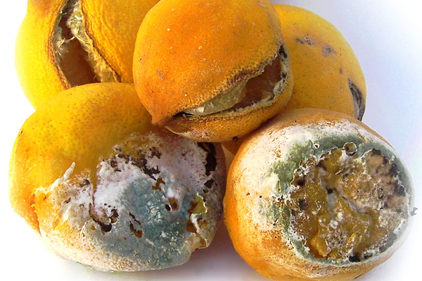
Food Waste 2
Not too long ago, I had a job in the produce department of a supermarket. One of the first things you learn working in such a place, is just how much food is wasted on a daily basis. Mind you, this was a very profitable store. It's not like we had fully stocked shelves and no customers. No, it was simply an unavoidable fact of life, that tons of food would be thrown out every week. On a busy day like Friday or Saturday, we could stack a pallet eight feet tall with the stuff that was thrown out from the produce and bakery departments.

Most of the time the food wasn't even spoiled. The customers didn't like buying produce that was at its peak ripeness. So if we didn't take it off the shelves, it would sit there until it did spoil (Some of the best tasting produce I've ever had was the super ripe stuff we had to throw out). Of course, the customer only played a small role in this wasteful system.

Lots of food had to be disposed of before it ever reached the shelves. We would receive shipments of spoiled food on a regular basis, and the manager of our produce department had the incredibly daunting task of trying to predict the future. Every day was a struggle to guess how much of any given product we would sell, and order the produce accordingly. Even guys that had been doing this job since before I was born struggled to get their orders just right, so empty spaces and spoiled food were a daily occurrence.

Then there was another added layer of unpredictability when it came to our distributors. Sometimes we'd order exactly how much we knew we would need, and instead they would send us half that amount. Sometimes we would receive double or even triple what we needed, and as expected, it would sit in the backroom and rot. By the time I left that job, they had an automated computer system taking over some of the ordering duties. Honestly, I have never seen shipments come in whose contents were so far removed from reality. I'll take a human over a machine any day.

There is an oft quoted statistic that roughly a third of the food that our world produces is thrown out rather than consumed. In case you're wondering, that's 1.4 billion tons of food every year. Since the average well fed human eats around 4lbs of food every day, that's enough to feed 1.9 billion people. That's more than double the 842 million people who are chronically malnourished. I've witnessed this waste first hand, and when I think about how many people in the world are starving, it's heartbreaking to see just how much of it has to be tossed in the trash.

As unbelievable as it sounds, there is no myth behind that statistic. Recently Popular Science put out an article with a great infographic, that clearly conceptualizes the wastefulness of the global food system.
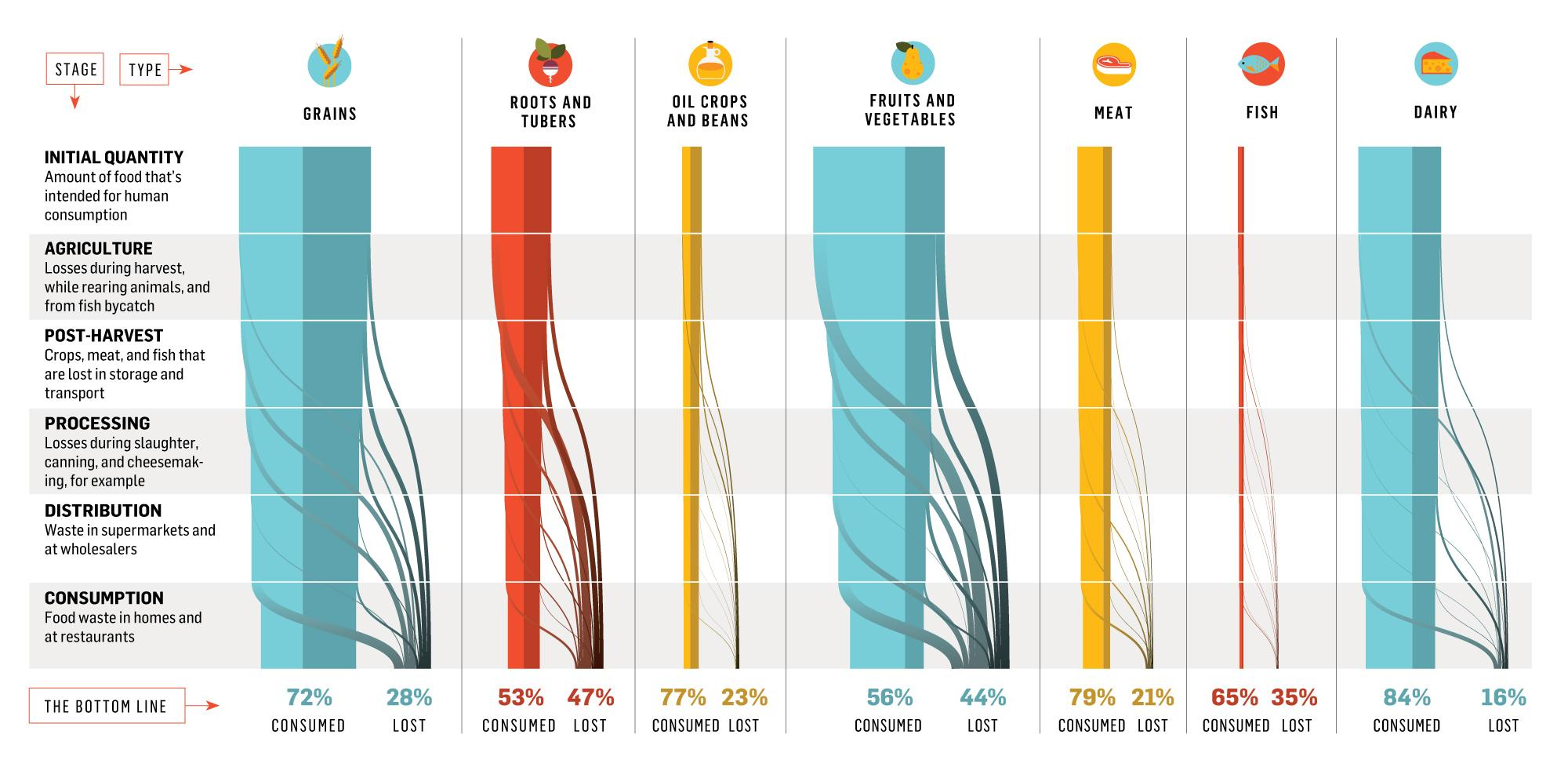
Food Waste
The image not only breaks down our food waste by category, but shows how much food is wasted in each step of the distribution process. Unfortunately, the solutions provided by the author fall of short of truly fixing our food distribution network. Roughly speaking, these included:
  • Better food labeling by putting a “spoil date” on the product rather than a sell by date.
  • Improving road networks in developing nations so that food would reach their destinations faster.
  • Better cooperation between farmers and processors, so that farmers know the exact amount of seeds to plant each season.
  • And better communication between distribution and the supermarkets.
I believe all of these measures would have some success in alleviating food waste, but they all involve trying to repair and improve an already failing system. It's all fine and good to talk about improving the infrastructure of third world nations, but first world nations have nearly the same amount of food waste.

We should ask ourselves, is the food industry really interested in putting a “spoil by” date on their products, when they make more money from customers who throw out good food? And of course there should be better communication between farmers, processors, distributors, and supermarkets, but I don't think it's going to happen. If it were possible it would have happened already. I think these systems are actually becoming worst over time. There's too much money to be made for those who control the preexisting system.

The more entrenched globalism becomes in our world, the less efficient it will be. That's an indisputable fact of systems and social organization. The bigger it gets, the more complicated it becomes. The more complicated it becomes, the less efficient it runs. Not to mention that these vast and sophisticated systems of commerce and distribution are extremely vulnerable to disruption, as preppers know all too well.

I think those of us in the prepper movement, alternative health movement, and natural food movement, already know the solution to this problem. You can see it very clearly in that infographic. That image reveals the same undeniable fact that I learned working in a supermarket. There is loss in every step of the distribution network. The farmer doesn't know how much to grow, the processors don't know how much to make, and the distributors don't know how much to order and send out.

In between every one of these steps is a truck that picks up goods from a warehouse, and can't help but deliver at least some the product in a damaged state (When I worked in produce, receiving damaged goods was an almost daily occurrence). So to hell with the distribution network. The answer is to grow our own food, or buy our food from other locals who are growing it. The closer you are to the food source, the less waste there will be. What little is wasted, is easily composted and put back into the system.

If there's one thing we shouldn't trust to an overstretched global distribution network, it's the food we need to survive. Not only is the system rife with waste, but it is obsessed with GMO's and pesticides, and is extremely vulnerable to disruption. The sooner we can rely on a local food network, the safer (and healthier) we'll be.

Delivered By Ready Nutrition

Thursday, August 14, 2014

 Five Frugal Ways You Can Cut Back on Your Water Bill

As California's drought continues to hammer the state, water prices are going through the roof. As state officials continue to beg residents to cut back on their water, local governments are discussing the possibility of hiring water cops to inspect private properties, and fine those who are wasteful. In my locale, I've seen the water table drop to frightening levels. The creek that runs all the way through the city is so low that it has been consumed by algae, and I can see trash at the bottom that hasn't seen the light of day in decades. (note to self, I wonder if there's any antiques down there?)

Of course, these problems aren't just restricted to California. There are numerous cities, mainly situated in the Western United States, that are completely unsustainable in this dry climate. Drought or no drought, there is simply not enough water to sustain our population at this usage rate. Everybody is going to have to cut back in a very big way, or migrate away from this region. The situation is dire to say the least. Fortunately there are quite a few ways you can cut back on your water, including a few you may have never considered.

Replace Your Shower Head

While there's certainly a lot of merit in getting a low flow shower head, the other option is to buy one of the trigger activated heads. It's basically the same kind of fitting you see on a garden hose, with a trigger that controls the flow of water, and a long flexible hose so you can spray the water wherever you need to. They're very common in motor homes and trailers, which often have less than a 100 gallons of water storage at their disposal. I can't say it would be the most comfortable shower, but you'll always be able to meter out the exact amount of water you need.

Water Heaters

When you need hot water from the tap, how long do you have to leave the water running before it becomes warm? You may be wasting anywhere from a half gallon to two gallons whenever you do that, depending on how cold your house is and how far away the water heater is from the sink. When I shave in the morning, I'm often appalled at how much water has to go down the drain, just so I can splash my face with hot water, or if I need to wash my hands. There's a couple different options you can choose from to shorten this lag time.

You can buy a point-of use-water heater, which is basically a tiny water heater that holds anywhere from 1.5 to 7 gallons of water, and only provides water to the sink you're using. I suspect that in the future as water becomes even more scarce, many homes may stop installing a central water heater, and instead have several smaller heaters scattered throughout the house. Doing so would save water, and potentially save quite a bit of electricity as well. The larger the container, the more energy it's going to take to keep it at a certain temperature even when it's not being used. You would have the choice of turning off certain heaters in parts of the house that aren't being used, reducing your overall electrical load.

The other option is to build a dedicated water pipe from the heater to the sink. Normally pipes are structured the same way the veins in your body are. A small number of large pipes feeding water into various smaller pipes throughout the house. When that main line gets cold, it takes the sinks and showers a long time to flush the cold water out. So by building a line that runs straight from the heater to the sink, bypassing all that mess, you'll get your hot water a lot faster. Depending on how your home is structured, it could be very complicated and expensive, or in this persons case, far cheaper than buying a point-of-use heater.

Rain Barrel 

I'll admit, this probably isn't the first time the readers of Ready Nutrition have considered rain collection, but it's worth mentioning again for anyone new here. It's such a simple idea that can save you quite a bit of money in the summer months. Granted, with the drought in full swing you may have to wait a while before you get any rain. Rest assured though, you'll be helping your wallet, and helping to alleviate the water shortage in your area when the dry months come again. There are many different ways to set one up, and it's a system that's easy to customize depending on the state of your property, and the budget you have in mind.

A friend of mine down the street managed to score a couple dozen 5 gallon buckets for free. He had a hose running from the collection tank, and into the buckets. In total, it probably cost him less than a hundred dollars to set up. And that's the beauty of harvesting rainwater. Anyone with any budget can set up a system, and they'll be saving some money, saving their plants, and creating a supply of water that can be consumed in an emergency with very little treatment needed.

Deep Watering

When there are no drought conditions, most people will make full use of their water supply. They'll make sure to water their lawns and gardens as often as they think is needed. The only problem is that frequently watering your plants, even if it's not hurting the plant, doesn't prepare them for drought conditions.

When you give a plant a little bit of water every day, the roots don't grow as deep into the soil. And why should they? There's a steady daily supply, so the roots will take in what they need for the day, and let the rest drain into the soil. When a drought occurs you'll have to stop watering them as often as you used to, and the sun will evaporate the surface of the soil much faster. What little water you can give them is often wasted before the plant can take it in.

To avoid this you should practice what's known as deep watering. This involves giving your plants a larger quantity of water, but only doing so infrequently, with at least several days between each watering. This encourages the plants to grow deeper roots, making them much more efficient at absorbing the water you give them. It also seems to work just as well with lawns as it does with vegetable gardens.

Washing by Hand

I've always considered a dish washer to be one of the most wasteful machines in existence. Unless you have a large family or guests over, it's really not worth it. The amount of time it takes to prep the dishes for the dishwasher is almost as long as it takes to clean them by hand, and they will typically use 10-15 gallons of water with each load, as opposed to a gallon or two by hand washing them. It's not difficult at all, and you can save more time by letting the tougher items soak, and leaving the rest to air dry.

The same principles apply to hand washing your clothes, which you might not expect if you've never done a load by hand. I always assumed that hand washing clothes would be tremendously time consuming, but it doesn't have to be. Most methods involve letting the clothes soak in soapy water for 10 or 20 minutes in a large container, and then stirring them occasionally. Afterward you may have to do some scrubbing here and there to get the tough stains out, but overall it's a pretty hands-off affair that's more waiting than doing. And you'll be saving upwards of 40 gallons of water, depending on how old your machine is.

In conclusion, saving water isn't just something you do in a drought. It's a lifestyle change that is going to be necessary for more Americans to adopt as time goes on. The abundance of water we once had is slowly draining away, and we're going to have to change our homes and change the way we do everyday tasks if we want to have a decent future.

Delivered By Ready Nutrition